
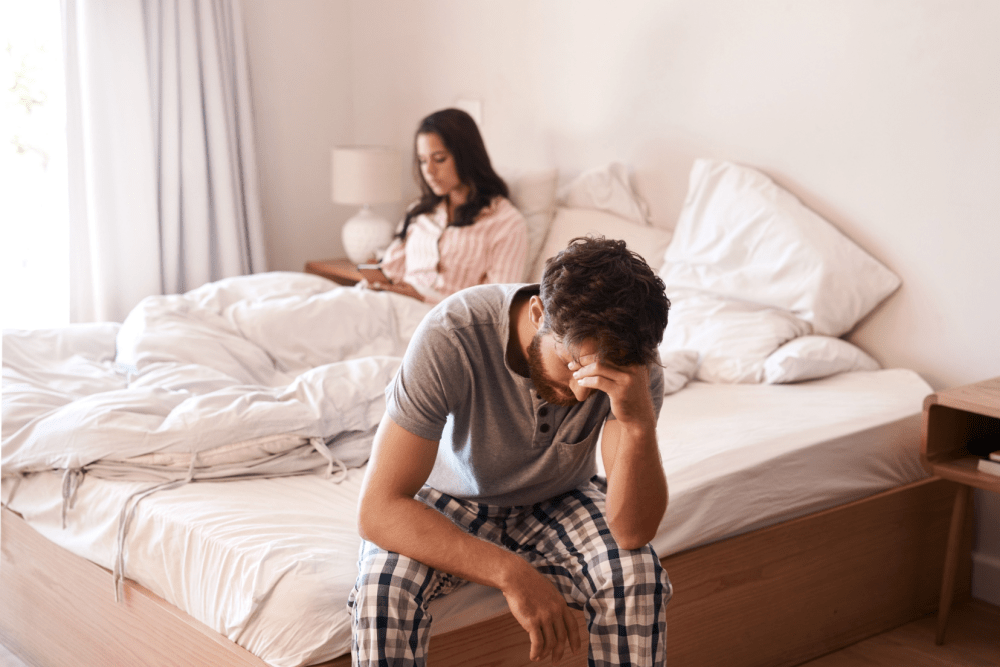
Sexual performance anxiety happens when worry about sex makes it harder to relax, become aroused, maintain an erection, or enjoy intimacy. It can often be improved by reducing the pressure to perform, staying focused on physical sensations, communicating openly with your partner, and addressing stress or negative thoughts about sex. If the problem continues or happens alongside erectile difficulties, speaking with a doctor can help determine whether psychological, physical, or both factors are involved.
Sexual performance anxiety can make it harder to stay aroused, maintain an erection, or simply enjoy sex. The more you worry about how you’re performing, the more that pressure can interfere with your sexual response.
The good news is that this cycle can often be broken. In this guide, we’ll explain what causes performance anxiety, how to recognize it, practical ways to manage it, and when to speak with a doctor.
How to Overcome Sexual Performance Anxiety
Overcoming sexual performance anxiety often starts with reducing the pressure around sex. Worrying about your erection, how long you’ll last, or satisfying your partner can make it harder to stay present and enjoy intimacy.
The goal isn’t to force the anxiety away, but to reduce that pressure and gradually rebuild confidence. Here are some practical ways to start:
Take the Pressure Off Performing
Performance anxiety often gets worse when sex starts to feel like a test. You may feel that you need to get an erection quickly, maintain it throughout sex, last a certain amount of time, or make sure your partner reaches orgasm.
Try changing what “successful sex” means. Erections naturally change, not every encounter needs to lead to intercourse, and pleasure does not depend on everything going according to plan.
Focus on enjoyment and connection instead of measuring erection quality, duration, or orgasm.
Focus on What You Feel, Not How You’re Performing
Performance anxiety pulls your attention toward questions like: Am I still hard? Am I losing arousal? Is my partner noticing? The more attention you give those questions, the less attention you have for the sensations that normally support arousal.
When you notice yourself monitoring your performance, bring your attention back to touch, breathing, movement, your partner, and what actually feels pleasurable.
Notice three physical sensations in the moment instead of checking whether your body is “performing.”
Talk Openly With Your Partner
Trying to hide performance anxiety can create even more pressure. Your partner may also misread changes in arousal as a lack of attraction or interest.
A simple conversation can reduce that uncertainty. You do not need to explain everything in detail—just acknowledging that you have been feeling anxious or getting stuck in your head can make intimacy feel more collaborative.
Have the conversation outside the bedroom, when neither of you feels pressure to immediately “fix” anything.
Take the Goal Out of Sex
If penetration or orgasm has become the moment when anxiety spikes, temporarily removing that expectation can help reduce pressure.
Kissing, touching, massage, oral sex, and other forms of intimacy can help you reconnect with pleasure without constantly wondering whether your body will cooperate.
Have an intimate experience where intercourse is intentionally not the goal.
Challenge the Thoughts Driving the Anxiety
Performance anxiety is often fuelled by thoughts that turn one difficult moment into a much bigger conclusion: I’ve failed. My partner must be disappointed. This is going to happen every time.
Rather than trying to suppress those thoughts, question whether they are actually true. Sexual response naturally varies, and one difficult experience does not predict the next.
Manage Stress Outside the Bedroom
Performance anxiety does not always begin with sex. Poor sleep, work pressure, financial stress, relationship concerns, and general anxiety can leave you tense before intimacy even begins.
Improving those background factors will not eliminate performance anxiety overnight, but it can make it easier to relax and stay present.
Rebuild Confidence Gradually
After several difficult experiences, it can be tempting to use the next sexual encounter as proof that everything is “back to normal.” That often creates exactly the pressure you are trying to escape.
Confidence is usually easier to rebuild through smaller, positive experiences where there is no requirement for intercourse, erection, or orgasm.
Let intimacy progress gradually instead of using one encounter as a test of whether the problem is fixed.
Get Professional Support When You Need It
If performance anxiety keeps returning, causes you to avoid intimacy, or begins affecting your confidence or relationship, professional support can help identify what is keeping the cycle going.
Counselling, CBT, sex therapy, or couples counselling may be useful depending on the situation. A medical assessment can also help when you are unsure whether other factors are contributing.
When anxiety is persistent, intimacy is being avoided, or you are unsure whether the problem is entirely psychological.
What Is Sexual Performance Anxiety?
Sexual performance anxiety is worry about how you’ll perform during sex, whether you’ll get or maintain an erection, last long enough, or satisfy your partner.
Some nervousness is normal. It becomes performance anxiety when those worries make it difficult to stay present and enjoy intimacy. You may start monitoring your body or anticipating something going wrong, which can add even more pressure.
It’s more common than many men realize. Research estimates that sexual performance anxiety affects 9–25% of men and has been associated with erectile dysfunction and premature ejaculation. For some men, it’s occasional. For others, one difficult experience can create worry about the next and start a cycle that becomes harder to break.
What Does Sexual Performance Anxiety Feel Like?
Performance anxiety doesn’t always begin in the bedroom. You may notice yourself worrying about sex hours or even days beforehand, replaying a previous experience, or wondering whether the same problem will happen again.
During intimacy, that can turn into excessive self-monitoring. Instead of focusing on your partner and what feels good, you may become preoccupied with your erection, how long you’re lasting, or whether your partner seems satisfied.
The experience is different for everyone. What matters is whether the worry is beginning to interfere with your sexual confidence, enjoyment, or relationships.
Why Does Sexual Performance Anxiety Happen?
Performance anxiety often starts when sex begins to feel like something you have to succeed at rather than something you experience.
A previous difficulty, pressure to satisfy a partner, concerns about your body, or expectations about how sex “should” go can shift your attention from pleasure and connection to evaluating your own performance.
Once that happens, even a small concern can become distracting. You may start anticipating problems before sex or monitoring yourself during it, creating pressure that wasn’t there before. For some men, everyday stress, relationship concerns, or low confidence can add to that pressure.
Some of the most common triggers include:
Fear of Something Going Wrong
One difficult experience, such as losing an erection or ejaculating sooner than expected, can create worry about it happening again.
Pressure to Satisfy Your Partner
Focusing too much on whether your partner is satisfied can make intimacy feel like something you need to get right.
Body Image & Self-Confidence
Concerns about your appearance, body, or sexual ability can make you more self-conscious and less present during intimacy.
Stress & Mental Load
Work, finances, poor sleep, and everyday responsibilities can make it harder to relax and stay engaged during sex.
Relationship Concerns
Conflict, poor communication, emotional distance, or uncertainty in a relationship can add pressure around intimacy.
Unrealistic Expectations
Pornography, past experiences, and cultural expectations can create unrealistic ideas about erections, stamina, and what sex should look like.
Suggested Reading: Stress And Its Impact On Male Sexual Performance
The Sexual Performance Anxiety Cycle
Performance anxiety can become self-reinforcing. It may start with a stressful week, difficulty maintaining an erection, ejaculating sooner than expected, or simply not feeling as aroused as usual.
If that experience stays with you, you may approach the next encounter thinking, What if it happens again? Instead of focusing on your partner and physical sensations, you begin monitoring your erection, arousal, or how long you’re lasting.
The problem is that sexual arousal can’t be forced. Anxiety makes it harder to relax and stay engaged, while closely monitoring your performance adds even more pressure.
If another difficulty occurs, it can reinforce the original worry, even when anxiety itself played a role and keep the cycle going.
How the Cycle Develops
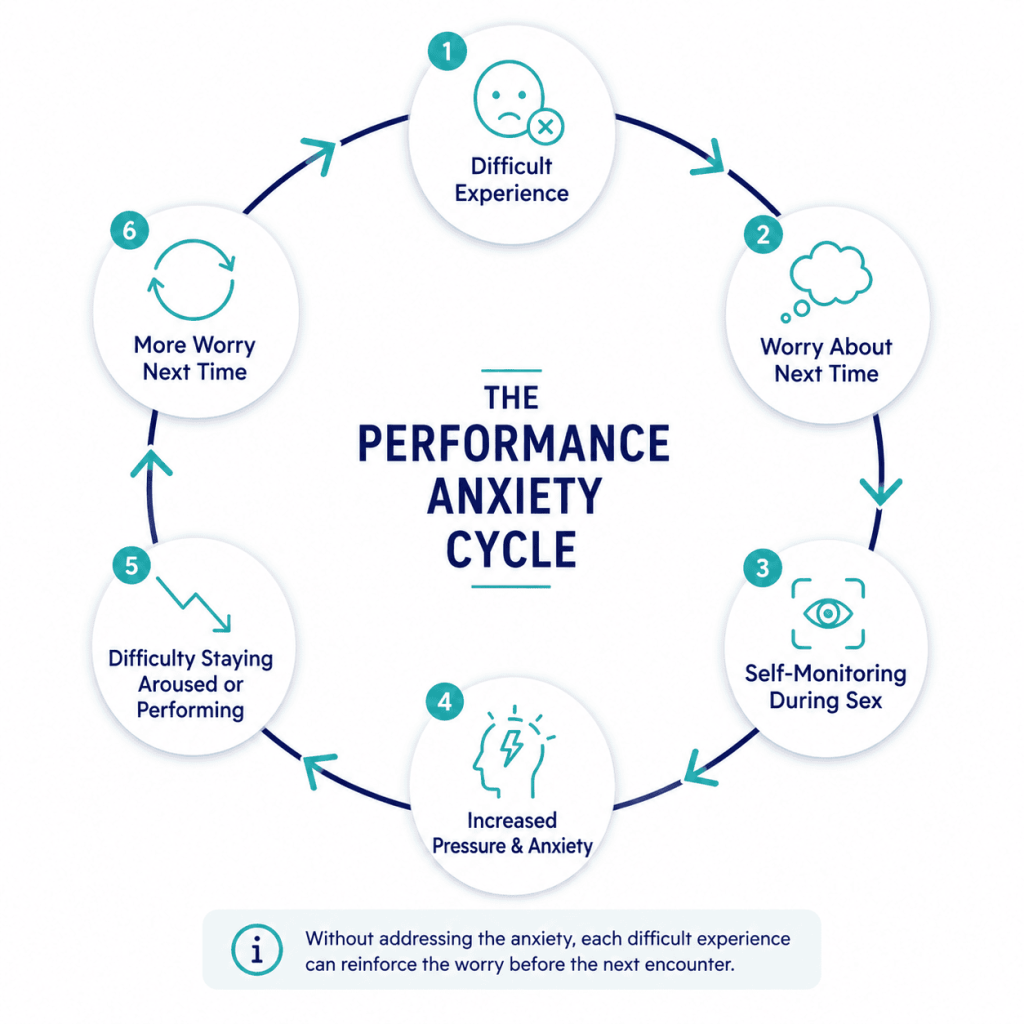
A difficult sexual experience can lead to worry about the next encounter, causing you to monitor your performance more closely. That self-monitoring can increase pressure and anxiety, make it harder to stay aroused or perform naturally, and reinforce the worry the next time you have sex.
Over time, the anxiety can even begin before intimacy starts. Some men may avoid initiating sex, make excuses, or feel anxious when they think an encounter might become sexual because they are already anticipating how they will perform.
This is what makes performance anxiety so frustrating: what started as one difficult experience can become a pattern driven partly by the fear of repeating it. Understanding that cycle is an important first step toward breaking it.
Is It Performance Anxiety or Erectile Dysfunction?
Performance anxiety and erectile dysfunction can look similar because both may involve difficulty getting or maintaining an erection. The difference is usually in the pattern.
Performance anxiety is more likely when erection difficulties appear suddenly, happen mainly in certain situations, or improve when you are alone or less worried about performance. Physical ED is more likely to develop gradually and occur more consistently, regardless of the situation.
Performance Anxiety
Difficulty started suddenly
Symptoms vary by situation or partner
Morning or nighttime erections are still present
Erections are generally normal during masturbation
Difficulty becomes worse with stress or performance pressure
Physical ED
Difficulty developed gradually
Symptoms occur consistently
Morning erections have become less frequent
Difficulty also occurs during masturbation
Symptoms occur even when you feel relaxed
These are general patterns, not a diagnosis. Physical and psychological factors can also occur together. A medical assessment can help determine what may be contributing.
Suggested Reading: Physical vs Psychological Erectile Dysfunction: How to Tell the Difference
When Should You Talk to a Doctor?
Occasional performance anxiety is common and doesn’t always require medical treatment. But if the problem keeps happening, starts affecting your confidence or relationship, or you’re unsure whether anxiety is the only factor involved, it may be worth speaking with a healthcare professional.
Consider getting assessed if:
The purpose of an assessment isn’t simply to label the problem as “physical” or “psychological.” It’s to understand what may be contributing and determine what kind of support makes sense for you.
How Is Sexual Performance Anxiety Treated?
Treatment depends on what is driving the anxiety. For some men, changing expectations around sex and using the strategies above may be enough. When anxiety is persistent, treatment may focus on the thoughts, behaviours, relationship concerns, or other factors keeping the cycle going.
Counselling & CBT
Cognitive behavioural therapy (CBT) can help identify thoughts that fuel performance anxiety and develop healthier ways of responding to them. Counselling may also help with general anxiety, low confidence, depression, or past experiences.
Sex Therapy
Sex therapy focuses specifically on sexual concerns. It may include techniques to reduce performance pressure, improve communication, and shift attention away from monitoring performance and back toward pleasure and intimacy.
Couples Counselling
When communication, relationship tension, or concerns about a partner’s expectations are contributing, couples counselling can help both partners communicate more openly and reduce pressure around intimacy.
Addressing Other Health Concerns
Performance anxiety can sometimes occur alongside another sexual or health concern. A medical assessment can help identify contributing factors so both the anxiety and any underlying issues can be addressed.
Lifestyle & Stress Management
Better sleep, regular exercise, reducing excessive alcohol, and managing everyday stress can support treatment, particularly when fatigue or stress regularly makes sexual anxiety worse.
The purpose of an assessment isn’t simply to label the problem as “physical” or “psychological.” It’s to understand what may be contributing and determine what kind of support makes sense for you.
How Ottawa Men’s Health Clinic Can Help
Performance anxiety doesn’t always have a single cause. If it keeps happening, the first step is understanding what’s contributing rather than assuming the problem is purely psychological.
At Ottawa Men’s Health Clinic, we take a broader look at your symptoms, sexual health, medical history, lifestyle, and any physical or psychological factors that may be involved. From there, we can recommend appropriate next steps based on your situation.
Medical Assessment
A review of your symptoms and health history can help determine whether performance anxiety, physical factors, or a combination of both may be contributing.
Counselling and Psychological Support
When anxiety, stress, confidence, or relationship concerns are involved, counselling or therapy may help address the thoughts and behaviours keeping the cycle going.
Treatment for Contributing Sexual Health Concerns
If another issue is contributing to the anxiety, treatment can address that alongside the psychological component rather than treating performance anxiety in isolation.
A Personalized Treatment Plan
There is no single approach that works for every man. Your treatment plan should reflect what is contributing to your symptoms and how they are affecting your sexual health and confidence.
CONFIDENTIAL MEN'S HEALTH SUPPORT
Performance Anxiety Doesn’t Have to Get in the Way
If performance anxiety is affecting your confidence or intimacy, we can help you understand what’s contributing and discuss your next steps.
Book a ConsultationSexual Performance Anxiety FAQs
Yes. Anxiety can make it harder to become aroused or maintain an erection by shifting your attention away from sexual sensations and toward worry and self-monitoring. This can happen even when there is no underlying physical problem.
Rather than trying to force thoughts away, bring your attention back to physical sensations such as touch, breathing, movement, and connection with your partner. Reducing the pressure to achieve a specific outcome can also make it easier to stay present.
It can. Occasional performance anxiety may improve as stress decreases or confidence returns. When it becomes a recurring pattern, addressing the thoughts, expectations, or experiences driving the anxiety can help break the cycle.
Anxiety may be more likely when erection difficulties happen mainly in certain situations, appeared suddenly, or don't occur during masturbation or during morning or nighttime erections. These patterns aren't diagnostic, and physical and psychological factors can occur together.
Yes. Performance anxiety isn't limited to new relationships. It can develop after a difficult sexual experience, during periods of stress, because of relationship concerns, or when you begin worrying about satisfying your partner.
It can. Avoidance may provide temporary relief from anxiety, but it can also make the next sexual encounter feel more important or intimidating. Gradually rebuilding comfortable, low-pressure intimacy may help prevent this pattern.
Treatment may include counselling, cognitive behavioural therapy (CBT), sex therapy, couples counselling, stress management, or a combination of approaches. If another sexual or health concern is contributing, addressing that may also be part of treatment.
Consider speaking with a healthcare professional if the problem is persistent, getting worse, causing you to avoid intimacy, affecting your relationship or confidence, or if you're unsure whether anxiety is the only factor involved.

Dr. Derek McLellan is a family physician with six years of focused experience in men’s health. He is a recognized provider of medical care in the evaluation and treatment of male sexual health and hormone-related conditions in Ottawa.
His clinical practice includes the assessment and management of erectile dysfunction, testosterone deficiency, and other men’s health concerns. With a background in family medicine, Dr. McLellan approaches patient care through comprehensive evaluation, evidence-based treatment planning, and ongoing clinical monitoring.