

Many men experiencing erectile dysfunction (ED) immediately ask themselves one question:
“Is this physical, or is it all in my head?”
The answer is often more complex than either option alone. Erectile dysfunction can result from physical health conditions, psychological factors, or a combination of both. Understanding the difference matters because the most effective treatment depends on identifying the underlying cause rather than simply treating the symptom.
This guide explains the differences between physical and psychological ED, outline the common signs and symptoms of each, discuss when it may be time to speak with a doctor, and help you understand how different ED treatments compare.
Physical vs Psychological ED
Use this quick comparison chart to understand how the most common erectile dysfunction treatments differ. Some options are designed for short-term symptom relief, while others may help address underlying factors such as blood flow, hormone levels, lifestyle habits, or performance anxiety. Each treatment has its own benefits, limitations, and ideal use cases, which we’ll explore in more detail below.
| Comparison Factor | Physical ED | Psychological ED |
|---|---|---|
| Typical Onset | Usually develops gradually over months or years. | Often begins suddenly, sometimes after a stressful event. |
| Symptom Pattern | Consistent difficulty achieving or maintaining erections. | Symptoms may vary depending on the situation or partner. |
| Morning Erections | Often reduced or absent. | Usually preserved. |
| Common Causes | Blood flow problems, diabetes, high blood pressure, low testosterone, and certain medications. | Stress, performance anxiety, depression, and relationship concerns. |
| Who It Affects | More common with age and chronic health conditions. | Can affect men of any age. |
| Treatment Approach | May include shockwave therapy, oral medication, testosterone replacement therapy (TRT), and lifestyle changes. | May include counselling, anxiety management, lifestyle changes, or medication. |
| Can Both Occur Together? | ✓ Yes. Many men experience both physical and psychological contributors simultaneously. | ✓ Yes. Many men benefit from treating both causes together. |
What Is Physical Erectile Dysfunction?
Physical erectile dysfunction (ED), also known as organic erectile dysfunction, occurs when an underlying medical condition interferes with the body’s ability to achieve or maintain an erection. Unlike psychological ED, which is primarily influenced by emotional or mental factors, physical ED results from changes in the body’s vascular, hormonal, neurological, or structural systems.
To understand why physical ED occurs, it helps to first understand how an erection works.
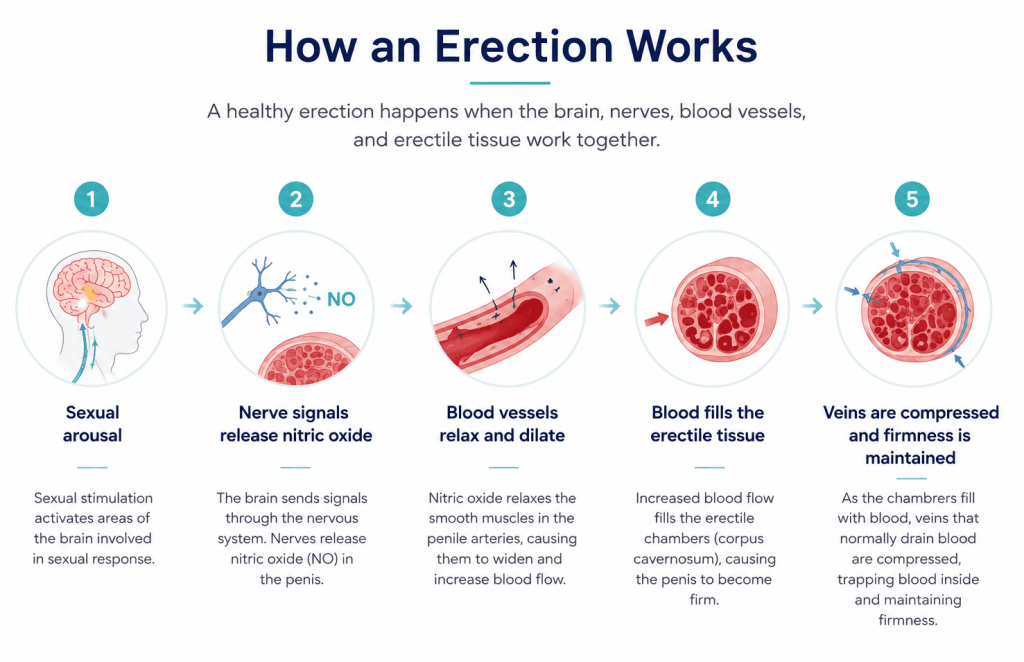
During sexual arousal, the brain sends signals through the nervous system that trigger the release of nitric oxide within the penis. This relaxes the smooth muscles of the penile arteries, allowing them to widen and increase blood flow into the erectile tissue. As blood fills the penis, the veins that normally drain blood away are compressed, helping maintain firmness until ejaculation or the end of sexual stimulation.
Because this process depends on healthy blood vessels, nerves, hormones, and erectile tissue working together, problems affecting any of these systems can interfere with normal erectile function.
Common Physical Causes of Erectile Dysfunction
Physical ED is most commonly associated with conditions that reduce blood flow or damage the blood vessels supplying the penis. In fact, vascular disease is considered one of the leading physical causes of erectile dysfunction.
Suggested Reading: Erectile Dysfunction Risk Factors
Signs Your ED May Be Physical
Although only a medical evaluation can determine the exact cause, certain patterns are more commonly associated with physical erectile dysfunction. The following signs may suggest that blood flow, hormone levels, nerve function, or another physical factor may be contributing to your symptoms.
Your ED could be physical if...
- Your symptoms developed gradually over months or years.
- Erections have become progressively weaker or less reliable.
- Difficulty occurs consistently, regardless of the situation or partner.
- Morning or nighttime erections have become less frequent.
- Erections during masturbation are also affected.
- You have diabetes, high blood pressure, heart disease, high cholesterol, or another chronic medical condition.
- You take medications known to affect sexual function.
What Is Psychological Erectile Dysfunction?
Psychological erectile dysfunction occurs when emotional, mental, or relationship factors interfere with the body’s ability to achieve or maintain an erection. Unlike physical ED, which is caused by changes in blood flow, hormones, nerves, or other medical conditions, psychological ED originates from factors that affect the brain’s role in sexual arousal.
An erection begins in the brain. Feelings of attraction, relaxation, confidence, and emotional connection all help initiate the nerve signals that increase blood flow to the penis. When stress, anxiety, depression, or other psychological factors interrupt these signals, achieving or maintaining an erection can become difficult—even when there is no underlying physical problem.
Psychological ED often appears suddenly and may vary depending on the situation, partner, or level of stress. For some men, erections remain normal during sleep or masturbation but become difficult during partnered sexual activity.
Suggested Reading: Stress And Its Impact On Male Sexual Performance
Common Psychological Causes of Erectile Dysfunction
Psychological ED can result from a variety of emotional, mental, and relationship factors. In many cases, more than one factor may be contributing at the same time.
Signs Your ED May Be Psychological
Although only a medical evaluation can determine the exact cause, certain patterns are more commonly associated with psychological erectile dysfunction. The following signs may suggest that stress, anxiety, emotional wellbeing, or relationship factors are contributing to your symptoms.
Your ED could be psychological if...
- Your symptoms appeared suddenly rather than gradually.
- Erections are normal during sleep or masturbation.
- Difficulty mainly occurs with a partner or in certain situations.
- Symptoms become worse during periods of stress or anxiety.
- You worry about sexual performance before intimacy.
- Relationship concerns or recent life events coincide with your symptoms.
- Erectile function varies from one sexual encounter to another.
Can Physical and Psychological ED Happen Together?
Physical and psychological erectile dysfunction often overlap, and many men experience a combination of both rather than one clear cause.
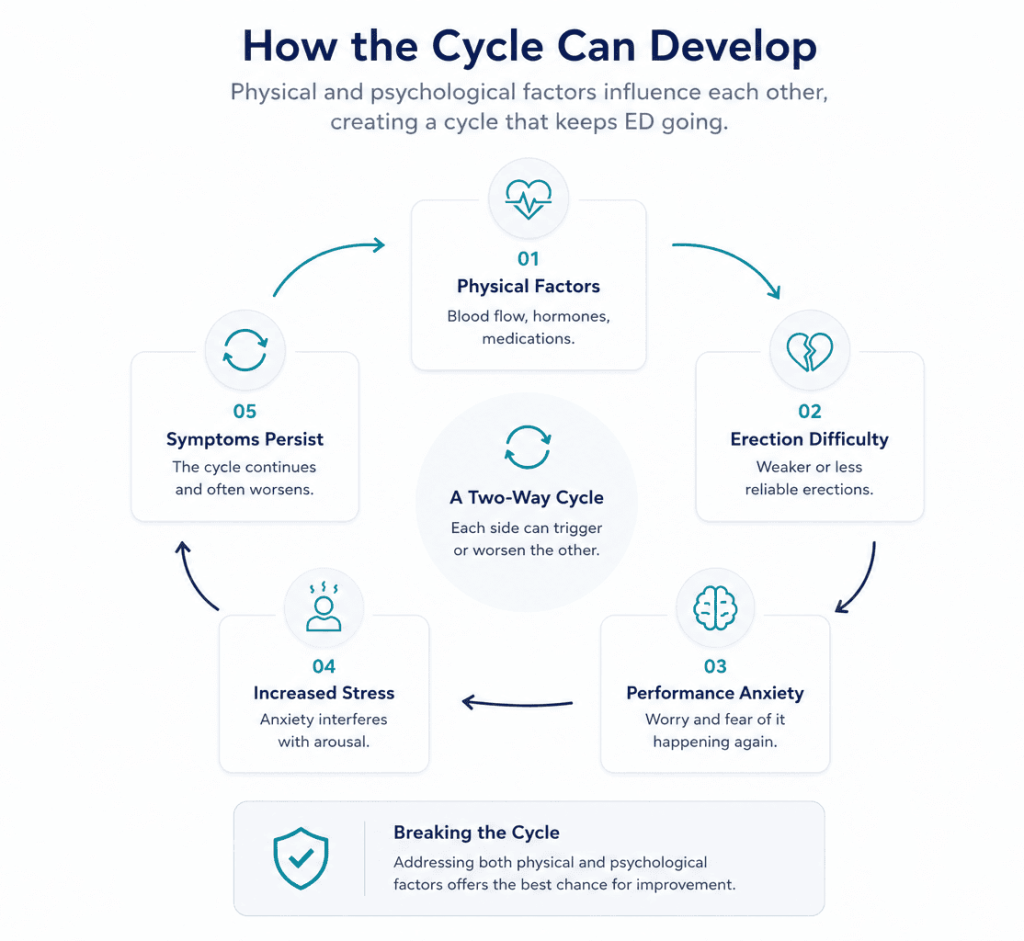
A physical issue may begin the problem. For example, reduced blood flow, diabetes, low testosterone, medication side effects, or another health condition may make erections less reliable. After one or more difficult sexual experiences, worry about performance can develop. That anxiety can then make it even harder to achieve or maintain an erection, creating a cycle that reinforces the original problem.
The reverse can also happen. Ongoing stress, depression, relationship concerns, or performance anxiety may first affect erectile function. Over time, poor sleep, reduced activity, increased alcohol use, or other lifestyle changes may add physical contributors.
How Doctors Tell the Difference
Determining whether erectile dysfunction is primarily physical, psychological, or a combination of both requires more than looking at one symptom. Doctors consider the pattern of your symptoms, your overall health, and the circumstances in which the problem occurs.
The evaluation usually begins with a detailed conversation about when the symptoms started, how often they happen, whether erections still occur during sleep or masturbation, and whether the difficulty changes depending on the situation or partner. Your doctor may also review your medical history, current medications, lifestyle habits, stress levels, and relationship concerns.
In some cases, blood tests or additional assessments may be recommended to check hormone levels, blood sugar, cholesterol, or other health markers. The goal is not simply to label ED as physical or psychological, but to understand which factors are contributing most.
Because both types often overlap, treatment may include more than one approach. A man with reduced blood flow may also develop performance anxiety, while someone with anxiety-related ED may still have underlying health factors that need attention.
Treatment for Each Type of ED
Once the contributing factors are identified, treatment can be tailored to the type of erectile dysfunction you are experiencing. The goal is not simply to improve erections temporarily, but to address the physical, psychological, or combined factors affecting sexual function.
Physical ED
Treatment focuses on improving blood flow, correcting hormone deficiencies when appropriate, and addressing underlying medical conditions.
- Shockwave Therapy
- Oral ED Medication
- Testosterone Therapy
- Lifestyle Changes
Psychological ED
Treatment focuses on reducing anxiety, rebuilding confidence , and addressing emotional or relationship factors affecting sexual performance.
, and addressing emotional or relationship factors affecting sexual performance.- Counselling
- Stress Management
- Lifestyle Changes
- Medication (When Appropriate)
Combined Approach
Many men experience both physical and psychological contributors. Treating both together often provides the best long-term outcomes.
- Personalized Treatment Plan
- Medical Treatment
- Lifestyle Changes
- Psychological Support
Physician's Perspective
Many men assume their erectile dysfunction is either physical or psychological, but in reality, both often play a role. A proper assessment helps identify the underlying contributors so treatment can be personalized to address the root cause rather than simply managing the symptoms.
Frequently Asked Questions
Physical vs Psychological ED FAQs
Erectile dysfunction can be physical, psychological, or caused by a combination of both. Physical ED is commonly linked to blood flow, hormones, nerves, medications, or medical conditions, while psychological ED is often associated with stress, anxiety, depression, or relationship concerns. A medical assessment is the best way to determine the underlying cause.
Psychological ED often starts suddenly, varies depending on the situation, and may occur mainly during partnered sex. Morning erections and erections during masturbation are often preserved. While these signs may provide clues, only a medical evaluation can determine the underlying cause.
Physical ED usually develops gradually and tends to occur consistently. Erections may become weaker over time, morning erections may decrease, and symptoms often occur regardless of the situation or partner. Medical conditions such as diabetes, heart disease, high blood pressure, and low testosterone are common contributors.
Not necessarily. Preserved morning erections may suggest that blood flow and nerve function are intact, but they do not rule out physical causes. Doctors consider your symptoms, medical history, medications, hormone levels, and overall health before making a diagnosis.
Yes. Chronic stress, anxiety, depression, and performance anxiety can interfere with sexual arousal and make it difficult to achieve or maintain an erection, even in otherwise healthy men.
Yes. This is very common. A physical problem may lead to performance anxiety, while ongoing anxiety can make physical symptoms worse. Many men benefit from a treatment plan that addresses both physical and psychological contributors.
Doctors review your symptom pattern, medical history, medications, lifestyle, hormone levels, cardiovascular health, and psychological factors. Blood tests or additional investigations may also be recommended to identify the underlying cause.
You should consider seeing a doctor if erectile dysfunction is persistent, becoming more frequent, affecting your confidence or relationship, or occurring alongside symptoms such as low libido, fatigue, diabetes, high blood pressure, or cardiovascular disease. Early evaluation can help identify underlying health conditions and guide appropriate treatment.
UNDERSTAND WHAT’S CAUSING YOUR ED
Get Clarity Before Choosing a Treatment
Erectile dysfunction can be physical, psychological, or a combination of both. A confidential consultation can help identify the factors contributing to your symptoms and guide a treatment plan suited to your health and goals.
Book a Consultation
Dr. Derek McLellan is a family physician with six years of focused experience in men’s health. He is a recognized provider of medical care in the evaluation and treatment of male sexual health and hormone-related conditions in Ottawa.
His clinical practice includes the assessment and management of erectile dysfunction, testosterone deficiency, and other men’s health concerns. With a background in family medicine, Dr. McLellan approaches patient care through comprehensive evaluation, evidence-based treatment planning, and ongoing clinical monitoring.